
Greenville County Arrest Records and Court Charges
Greenville County arrest records begin with law enforcement and detention records. They can include the arresting agency, arresting officer, booking status, charges listed at intake, warrant, ticket, or case numbers, bond or sentence notes, and holds from other agencies. The Greenville County Public Records Division is the local channel for law-enforcement records at the Law Enforcement Center, while current custody details are checked through the county inmate search and Detention Center records.
Court charge records are different. After arrest, the case may start in Bond Court or Magistrate Court, move to Municipal Court for city charges, or become a General Sessions case handled by the Thirteenth Judicial Circuit Solicitor. Greenville County uses the arrest warrant number as the case number on the Public Index for General Sessions, and the Clerk requires an arrest warrant number and/or indictment number for General Sessions document copies. Current jail custody belongs with Greenville County inmate records; the full court file, plea, sentence, and disposition belong with criminal court records.
The Greenville County Public Records contact page identifies the office used for law-enforcement records that can support an arrest-record request.
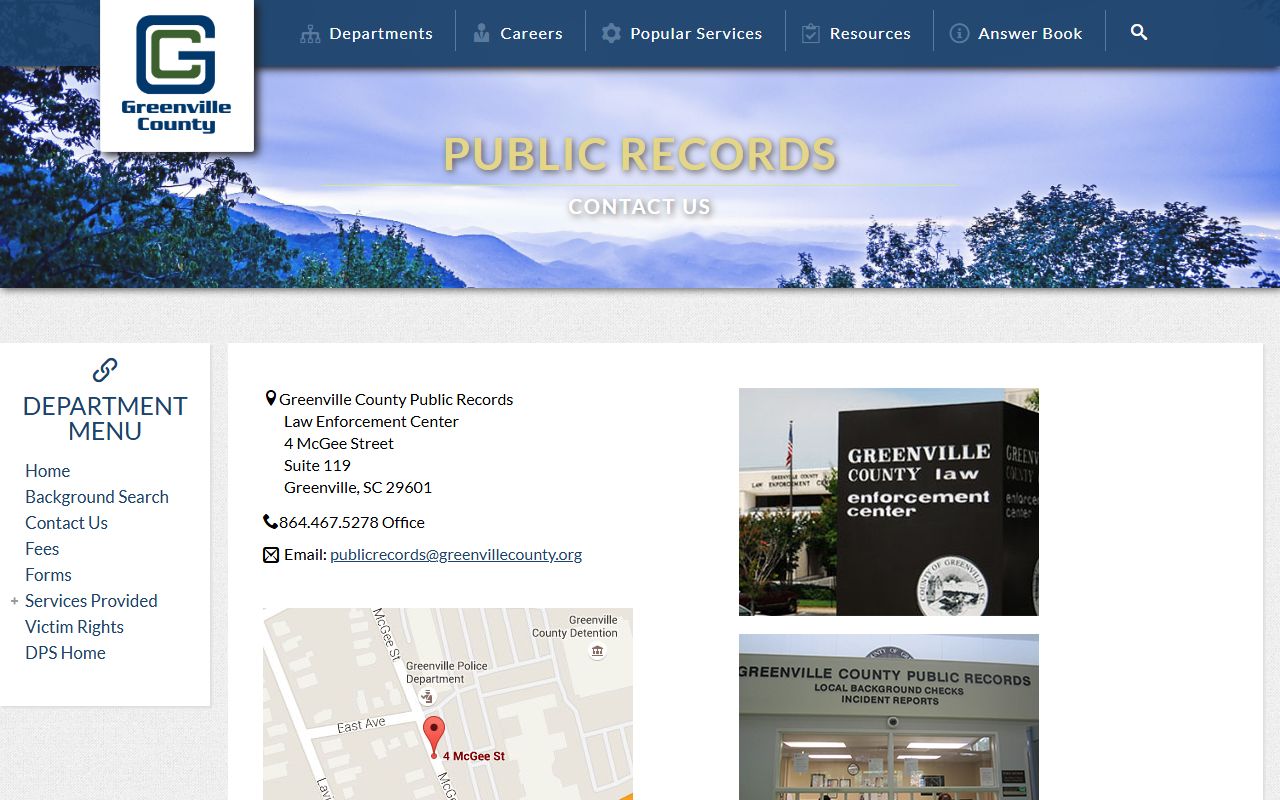
That Public Records route matters when a user has an arrest date or agency name but not yet a court case number.
Greenville County Charge Access Channels
No single Greenville County source shows every arrest and every charge status from start to finish. A charge may appear first as a warrant, ticket, jail booking entry, or Bond Court matter. It may later appear on the Greenville County Public Index, a Municipal Court portal, or the Solicitor's General Sessions docket. That split is important because a new arrest may have booking data before an indictment exists, while an older General Sessions matter may have a Solicitor docket entry and Clerk copy options.
- Use the arrest warrant number, ticket number, or case number from jail, police, or court paperwork when available.
- Check current custody and booking details through the Greenville County inmate search if the person may still be detained.
- Search the Greenville County Public Index for Circuit and Magistrate records, using the warrant number as the General Sessions case number when known.
- For City of Greenville charges, use the municipal portal or request official city records from the city records office.
- For active General Sessions court dates and charge tracking, check the Thirteenth Circuit Solicitor docket.
The Public Records fee schedule is the local source for arrest-data charges, jail record fees, mug shot copy fees, and certified summary court disposition fees.
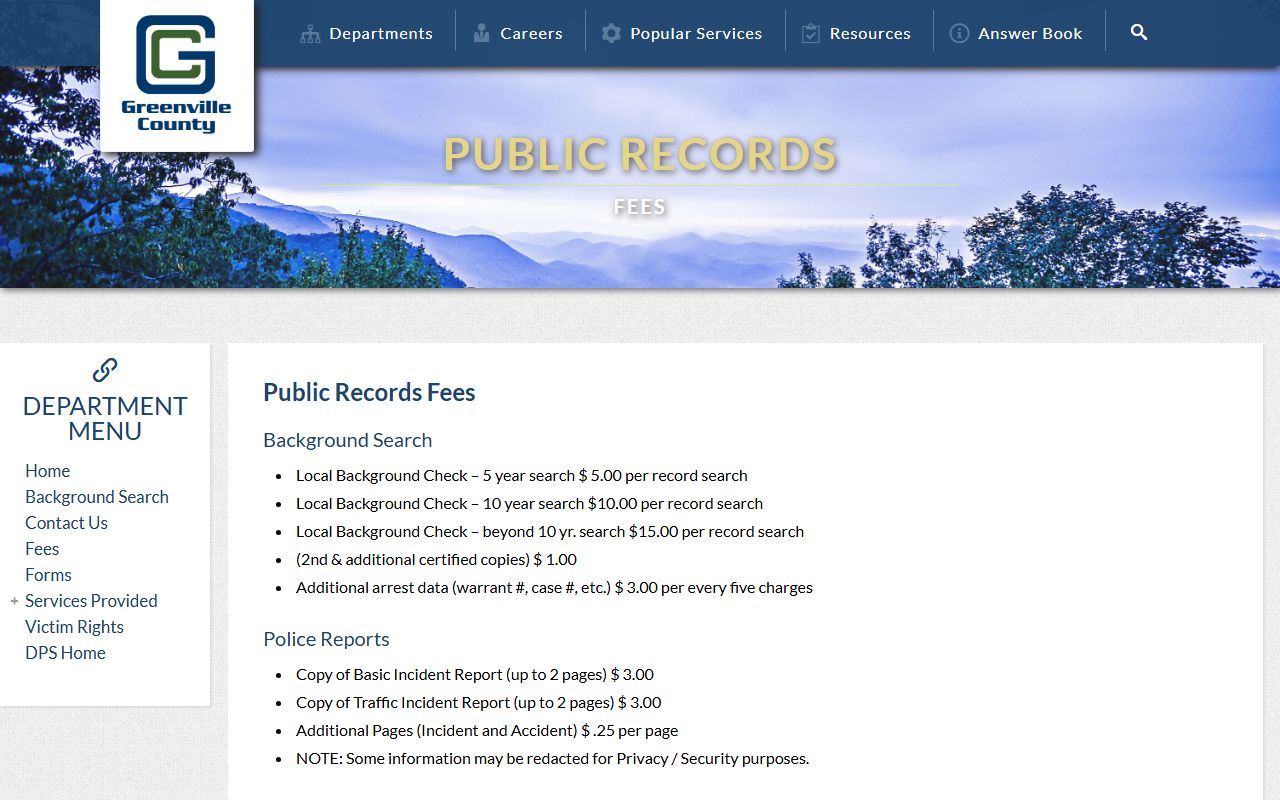
Those fees help separate law-enforcement arrest data from court-file copies requested through the Clerk of Court.
Greenville County Charging Documents
Charges after arrest are built from legal paperwork, not just the fact that a person was booked. In Greenville County, law enforcement may initiate an arrest warrant or ticket. A magistrate may issue a warrant based on sworn facts. Bond Court may handle the first bond stage. The Solicitor then prosecutes General Sessions cases and controls the active criminal docket for those matters. For lower-level cases, Magistrate or Municipal Court may keep the charge record instead.
| Document | Greenville County Use | Identifier to Save |
|---|---|---|
| Arrest warrant or ticket | Often the first charge identifier after arrest; Magistrate Court can issue arrest warrants and lower courts may keep the related case. | Warrant, ticket, or case number. |
| Indictment | Used in General Sessions prosecution after Solicitor review and grand-jury action for felony or serious misdemeanor cases. | Indictment number and defendant name. |
| Solicitor docket entry | Shows active General Sessions case details such as warrant number, indictment number, defendant, and date of arrest. | Warrant number, indictment number, docket date. |
The Greenville County incident report request page can help when incident and arrest details are needed to identify the correct warrant, ticket, or case number.
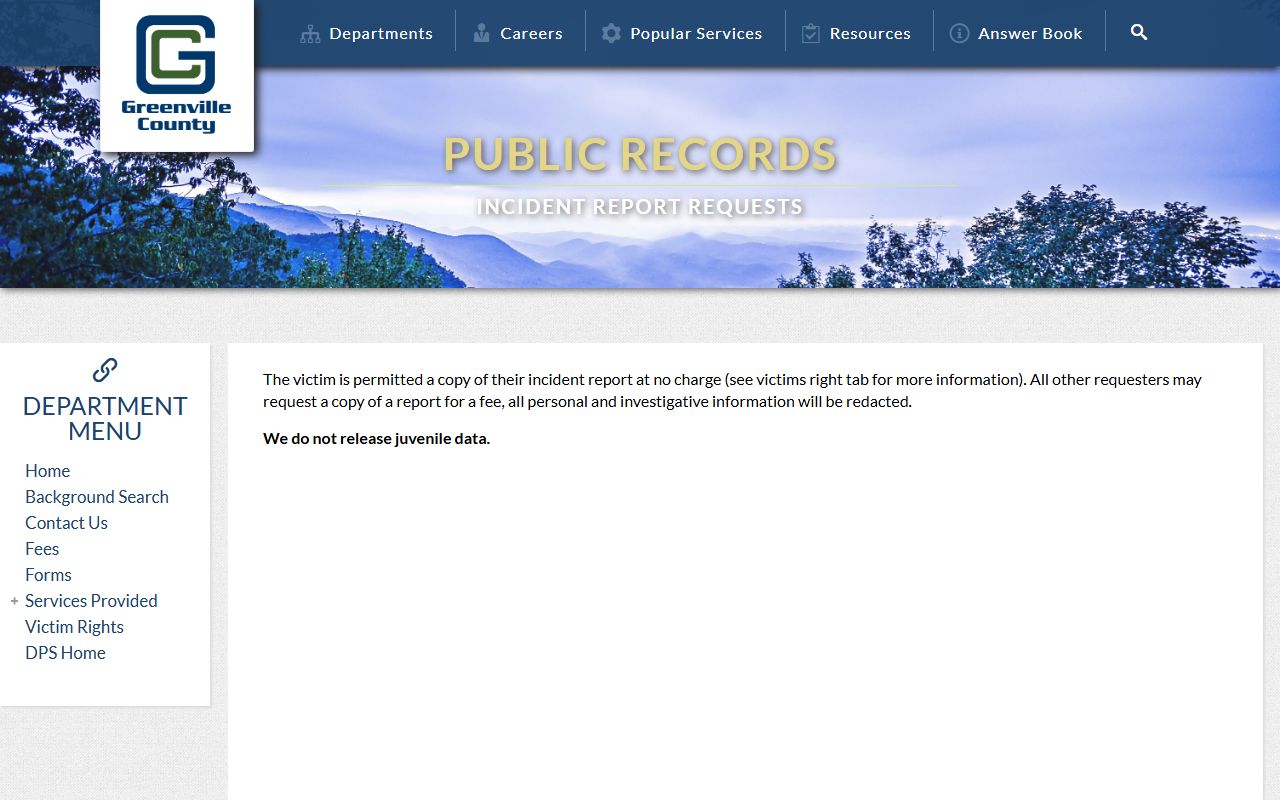
Incident records do not replace the court file, but they can point to the law-enforcement side of the charge path.
Greenville County Bond Court Charges
Bond Court is a key stop between arrest and the later court record. Greenville County Bond Court is at LEC Room 116-A, 4 McGee Street, Greenville, SC 29601, phone 864.467.2402. After an arrest, Sheriff's policy says the person is taken before a magistrate as soon as possible for arraignment and bond information, then booking records, fingerprints, and photograph, followed by release on bond or incarceration. That is why early charge data may show bond or hold information before the final court outcome exists.
The Greenville County Bond Court page identifies the local bond setting channel tied to many arrest and charge records.
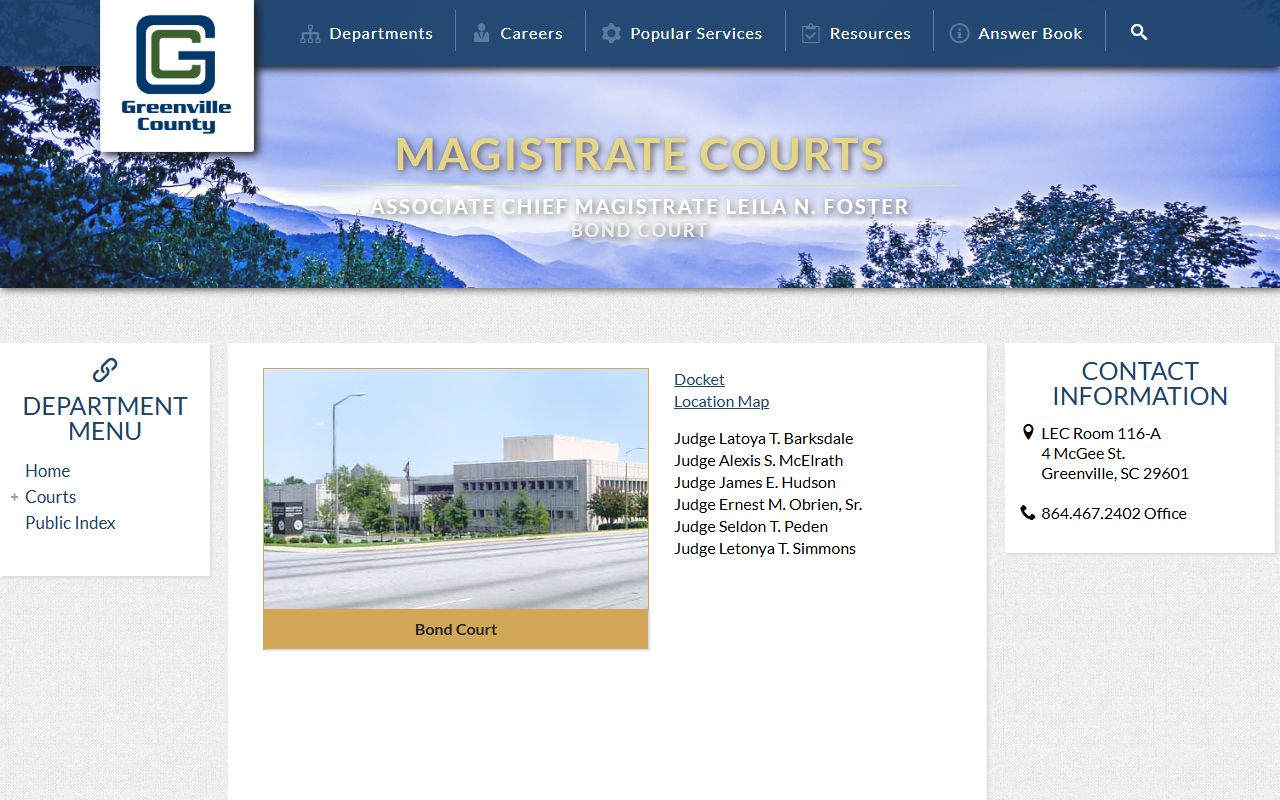
Bond Court context helps explain why a booking entry, bond entry, and later Solicitor docket may not all update at the same time.
Greenville County Charge Status
A Greenville County charge can change as the case moves. The Solicitor may proceed, amend, reduce, or dismiss a charge. A court may enter a disposition after a plea, trial, or dismissal. Some records may remain visible as file information even when document images are not online. General Sessions online records show file information, but Clerk document copies require a request to Criminal Records with the arrest warrant number and/or indictment number.
| Status | What It Means in a Charge Record |
|---|---|
| Pending | The charge is open, active, or awaiting the next hearing, plea, indictment step, or court action. |
| Amended or reduced | The listed charge changed after review, plea talks, indictment, or court order. Compare each charge line, not just the case caption. |
| Dismissed | The charge was ended by court action. Dismissed warrants are named by the Clerk as a restricted copy category. |
| Nolle prosequi | The prosecutor declined to continue that charge. It is not the same as a conviction. |
| Disposed | The court entered an outcome such as plea, verdict, dismissal, or sentence for the charge or case. |
Note: Status can lag across jail, court, and Solicitor systems, so verify urgent charge questions with the owning office.
Greenville County Charges vs Convictions
An arrest or charge is an accusation, not proof of guilt. Greenville County's inmate-search disclaimer says an arrest does not mean conviction and that most inmates are pretrial detainees. Court records may later show whether the charge was dismissed, reduced, pleaded, tried, or sentenced. For a complete outcome, use the criminal court file rather than relying only on a booking or charge list.
| Point | Charge | Conviction |
|---|---|---|
| Stage | Filed or listed after arrest, ticket, warrant, indictment, or Solicitor action. | Entered after a guilty plea, guilty verdict, or qualifying adjudication. |
| Where found | Booking records, Public Records data, Public Index, Municipal Court, Magistrate Court, or Solicitor docket. | Court disposition, sentencing record, or certified court copy. |
| Legal meaning | An allegation that still may be pending, amended, dismissed, or not prosecuted. | A final finding or plea that may carry sentence, fines, probation, or collateral effects. |
| Best verification | Owning court, Clerk Criminal Records, Solicitor docket, or Public Records identifiers. | Certified court disposition or official criminal court record. |
Greenville County Charges and SLED
South Carolina statewide criminal-history access is separate from a Greenville County case file. SLED CATCH is the statewide South Carolina criminal-history portal, governed by S.C. Code Title 23, Chapter 3. It is useful when the question is broader than one Greenville County court case, but it should not be treated as a replacement for the Clerk, Solicitor, Magistrate, Municipal Court, Public Records, or Detention Center records.
That distinction is important when an arrest record shows several charge lines. SLED may report South Carolina criminal-history information, while Greenville County sources show the local path of a charge through booking, bond, warrant number, indictment, Municipal Court, Magistrate Court, or General Sessions. A charge that appears in one channel may still need a Clerk copy, Solicitor docket check, or Public Records request before the final status is clear.
The image from S.C. Code Title 23, Chapter 3 supports the state criminal-history distinction for Greenville County arrest records and court charge research.
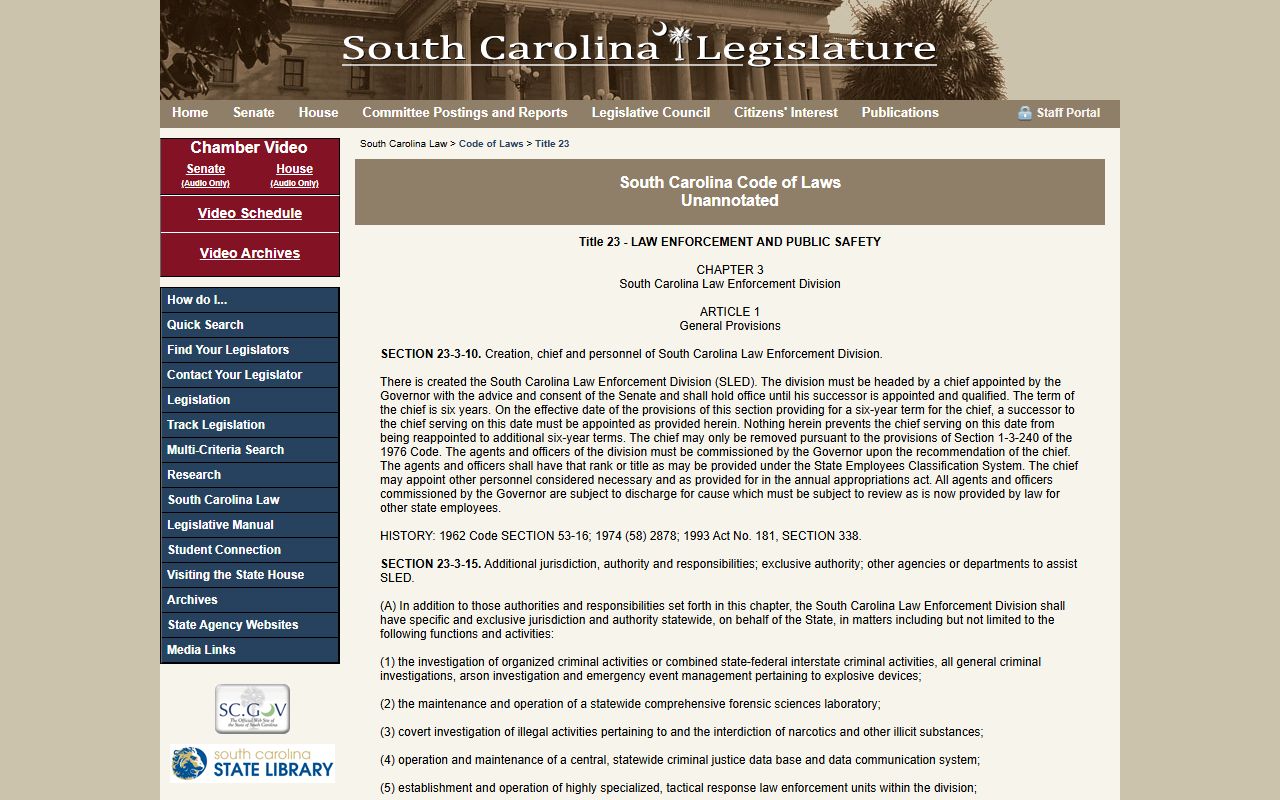
State history results can help with a broad criminal-history question, but the local charge status still comes from the case-owning source.
Restricted Greenville County Arrest Records
Public access is not absolute. The Clerk identifies dismissed warrants, sealed judicial-order cases, juvenile cases, adoption filings, and filings prohibited by law as exceptions to ordinary viewing, copying, and printing. South Carolina juvenile records are confidential under S.C. Code Section 63-19-2010, and sealed court records require a court order under Rule 41.1. Rule 41.2 also governs personal identifying information in court filings.
Greenville County Public Records is also a separate law-enforcement channel, not the same office as the Clerk. It can handle certain booking reports, jail records, mug shots, local background checks, and arrest data fees. The researched fee schedule lists additional arrest data such as warrant number or case number at $3 per every five charges. That can help connect an arrest record to the later court charge record when the court case number is not yet known.
The Greenville County inmate search portal image is included here because booking data is a different channel from court charges after arrest.
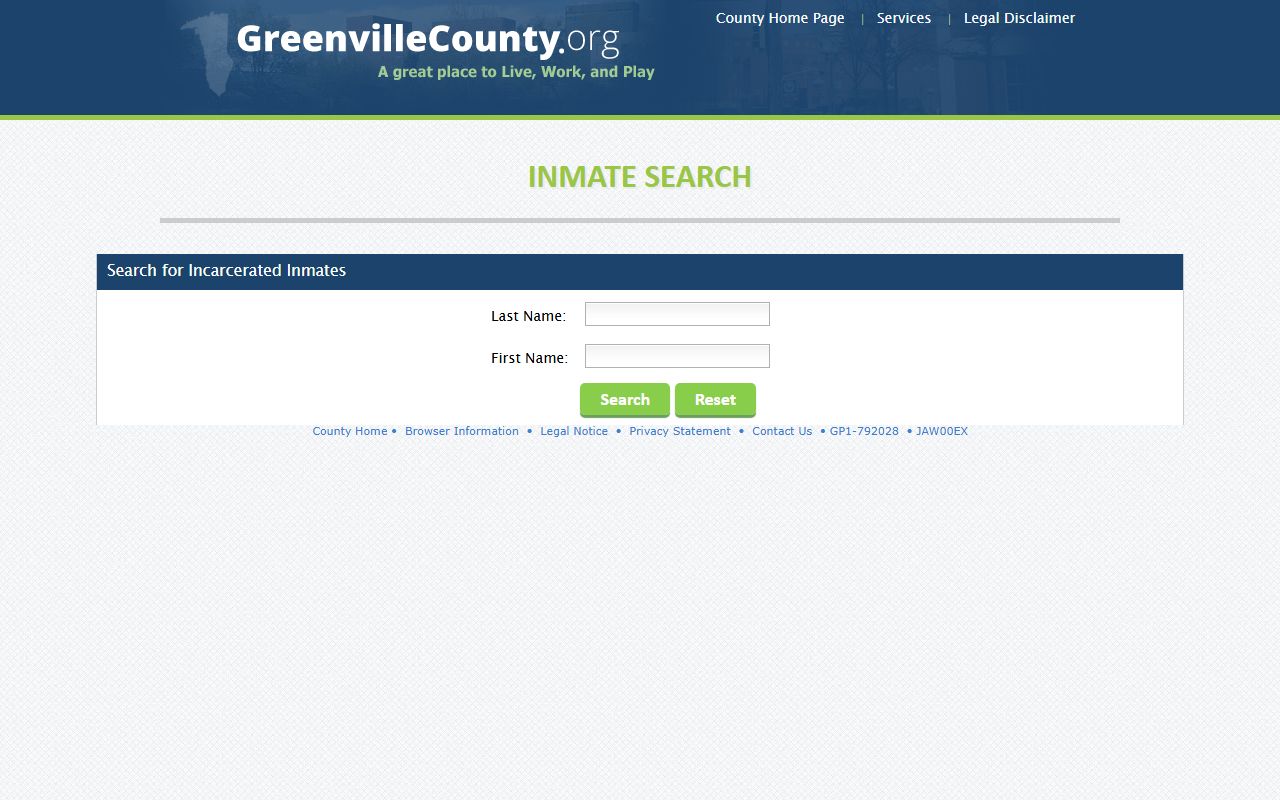
Use the jail search for current custody and booking context, then use court channels for formal charge status and final outcomes.
Important: Greenville County arrest records, charge lists, and background checks should not be used for FCRA-regulated screening unless handled through a lawful consumer-reporting process.