
Greenville County Criminal Court Files
Greenville County is in South Carolina's Thirteenth Judicial Circuit. Circuit Court is the general-jurisdiction trial court, and its criminal division is the Court of General Sessions. General Sessions criminal court records can include the charging path, arraignment activity, motions, hearing entries, pleas, trial events, disposition, and sentence. The file is kept as a court record, not as a law-enforcement booking file.
Magistrate Court is also important in the criminal process. Magistrates may issue arrest warrants, set bond, hold preliminary hearings, and hear lower-level criminal and traffic matters. Municipal Courts handle city offenses and ordinance cases. A felony or serious misdemeanor may begin with a warrant or bond event, then move into General Sessions for prosecution.
The South Carolina Judicial Branch Circuit Court page describes Circuit Court as the state trial court with Common Pleas civil and General Sessions criminal divisions.
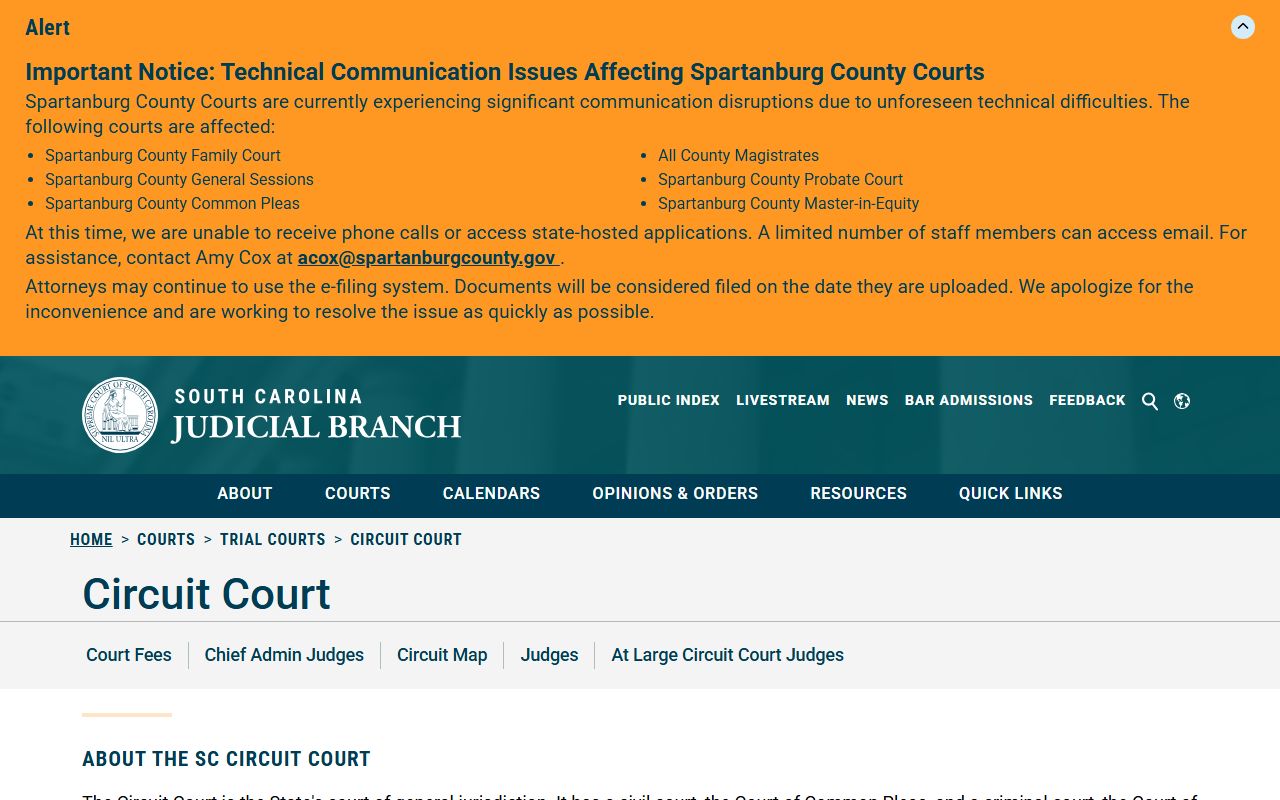
That division structure is the reason Greenville County criminal court records must be separated from civil Common Pleas files.
Search Greenville County Criminal Court Records
Start with the Greenville County Public Index or the South Carolina Judicial Branch case-records search for public case information. For General Sessions, the Clerk says online records go back to 1984 and display file information only. Document images are not generally available online for General Sessions criminal cases, so a public search often identifies the case before a copy request is sent.
- Search the Public Index by defendant name if the case number is unknown.
- Use the arrest warrant number when available because the Clerk says it is called the case number in the Public Index.
- Use the indictment number when requesting General Sessions criminal documents from the Clerk.
- Check the Solicitor docket for active General Sessions dates and criminal scheduling.
- Request certified copies from Clerk Criminal Records when a sentence, order, warrant, or indictment copy is needed.
For the full all-court access map, Greenville County court records include civil, family, probate, magistrate, municipal, and public-records fallback channels.
Greenville County Criminal Case Flow
A criminal court record grows as the case moves through the court. The first identifier may be a warrant, ticket, or arrest paperwork. General Sessions then uses warrant and indictment identifiers to connect the accusation to the prosecution. Docket entries track settings and filings, while orders and sentence documents show final court action.
Case flow: Charges Filed › Arraignment › Pretrial and Motions › Plea or Trial › Disposition › Sentencing
| Stage | What Appears in the Record |
|---|---|
| Charges Filed | Warrant, ticket, indictment, charge text, and defendant identifiers may begin the record. |
| Arraignment | Initial court appearance, plea information, and bond or appearance instructions may be noted. |
| Pretrial and Motions | Motions, continuances, discovery-related orders, and hearing dates may appear as docket activity. |
| Plea or Trial | The record may show a guilty plea, not guilty plea, trial setting, verdict, or case resolution event. |
| Disposition | The charge outcome, such as guilty, not guilty, dismissed, or other final action. |
| Sentencing | Sentence terms, probation, fines, costs, restitution, or custody status ordered after conviction. |
Greenville County Criminal Record Fields
A General Sessions criminal court record is useful because it ties the defendant, charge, warrant number, indictment number, court events, disposition, and sentence into one case file. The online Public Index can show file data, but the Clerk's Criminal Records Department is the copy source for General Sessions court documents.
| Field | What It Shows |
|---|---|
| Case Number | The Public Index case identifier; for General Sessions this may be the arrest warrant number. |
| Indictment Number | The formal prosecution identifier needed or helpful for criminal document requests. |
| Defendant | The person accused in the criminal court case. |
| Charges | The offenses filed in court, including charges later amended, reduced, dismissed, or resolved. |
| Court Agency | General Sessions, Magistrate, Municipal, or another court level tied to the event. |
| Docket Activity | Hearings, continuances, motions, orders, pleas, trial settings, and disposition entries. |
| Disposition | The outcome of each charge or case, such as guilty, not guilty, dismissed, or nolle prosequi if shown. |
| Sentence | Custody, probation, fines, restitution, or other penalty imposed after conviction. |
| Redactions | Home addresses and personal identifying information may be omitted under court rules. |
General Sessions Copy Requests
The Clerk maintains General Sessions court documents but does not retain Magistrate Court, Municipal Court, or State Grand Jury records. For Greenville County General Sessions copies, requests may be made in person at the Criminal Records Department, Suite 228, Greenville County Courthouse, or by email at coccriminalrecords@greenvillecounty.org. The requester should provide the arrest warrant number and/or indictment number and name the specific documents needed.
| Copy Rule | Greenville County Detail |
|---|---|
| Online coverage | General Sessions online records go back to 1984. |
| Online images | General Sessions displays file information only, not document images. |
| Plain copies | $0.25 per page. |
| Certification | $10 per certification. |
| Exemplification | $10. |
| Research/redaction over 15 minutes | $18 per hour, prorated in 15-minute increments. |
| Newly adjudicated cases | Documents may require 2 to 3 business days before copies are available. |
Charges vs Convictions
A charge is an accusation filed into the criminal process. A conviction is a final guilty finding or guilty plea. Greenville County criminal court records can show both, and the distinction matters because a case may contain charges that were amended, reduced, dismissed, or resolved without a conviction. For a closer look at filed charges and arrest-to-charge data, use Greenville County court charge records.
| Point | Charge | Conviction |
|---|---|---|
| Meaning | An allegation filed by warrant, ticket, indictment, or other charging paper. | A final guilty outcome by plea or verdict. |
| Where It Appears | Early in the case record, Solicitor docket, Public Index, or charge paperwork. | Disposition and sentence entries in the criminal court record. |
| Can Change | Yes, charges may be amended, reduced, dropped, or dismissed. | Changes usually require appeal, post-conviction relief, expungement eligibility, or court order. |
| Use Caution | Does not prove guilt. | Still check sentence, appeal status, and expungement or sealing orders. |
Solicitor and Public Defender
South Carolina uses solicitors rather than district attorneys. Greenville County is part of the Thirteenth Judicial Circuit Solicitor's Office, covering Greenville and Pickens counties. The Solicitor prosecutes General Sessions cases and schedules General Sessions criminal court dates. The Solicitor docket summarizes active cases and includes warrant number, indictment number, defendant, and date of arrest.
The Greenville County Public Defender is listed by the South Carolina Commission on Indigent Defense at Greenville County Courthouse, 305 East North Street, Room 123, Greenville, SC 29601. The phone is 864.467.8522, fax is 864.467.8521, and the mailing address is PO Box 10264 F.S., Greenville, SC 29603. Eligible defendants should use the county where charges are pending.
The SCCID Greenville County Public Defender listing identifies the local defender office for pending criminal charges.
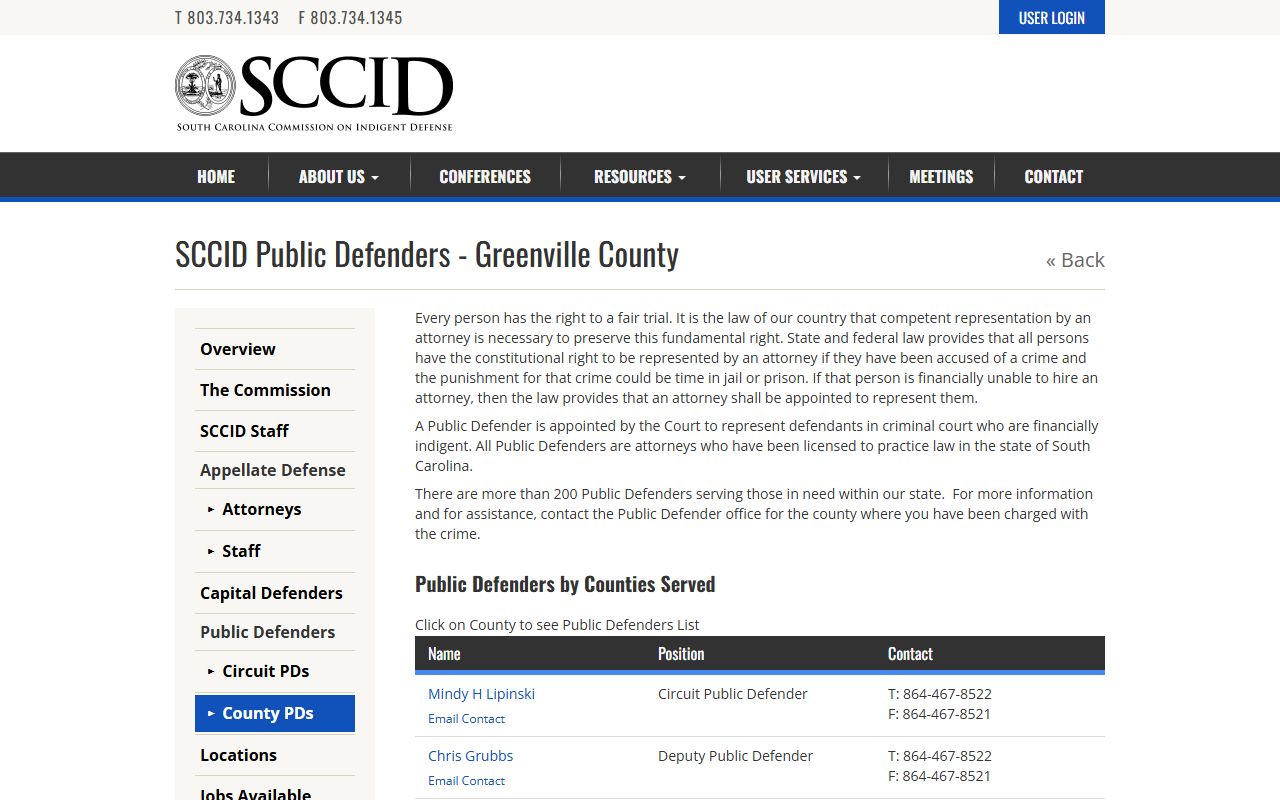
That listing is relevant after charges are filed because counsel questions belong with the defender office or private counsel, not a records clerk.
The SCCID statewide office-location listing also includes the Greenville Public Defender address, phone, fax, and mailing address.
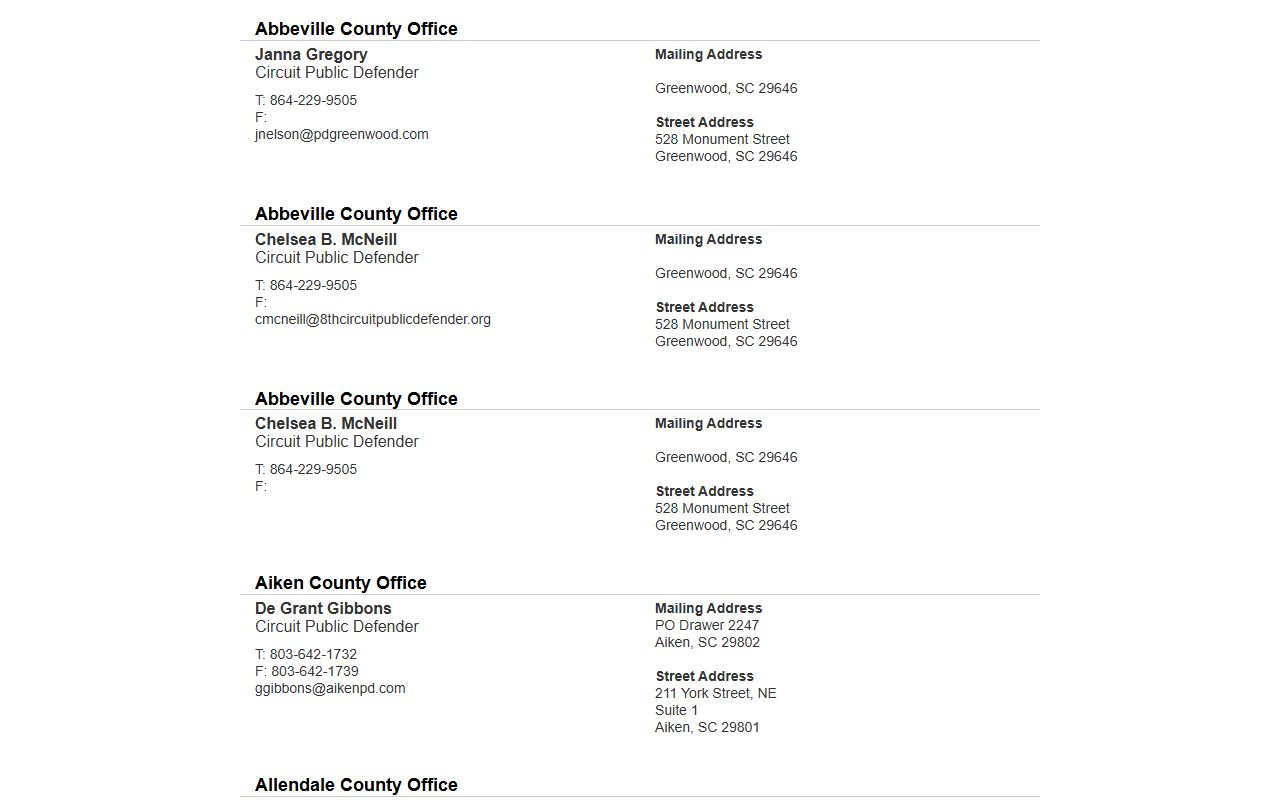
The statewide list helps confirm that Greenville County matters should be routed to the Greenville defender office when representation is sought.
SLED Criminal History Is Separate
South Carolina criminal-history searches are different from Greenville County criminal court records. SLED maintains and disseminates criminal-history information under state law, while the Greenville County Clerk maintains the General Sessions court file. A statewide criminal-history result may not replace the court's docket, sentence sheet, or certified disposition.
The SLED CATCH criminal-history portal is a state channel for South Carolina criminal-history information.
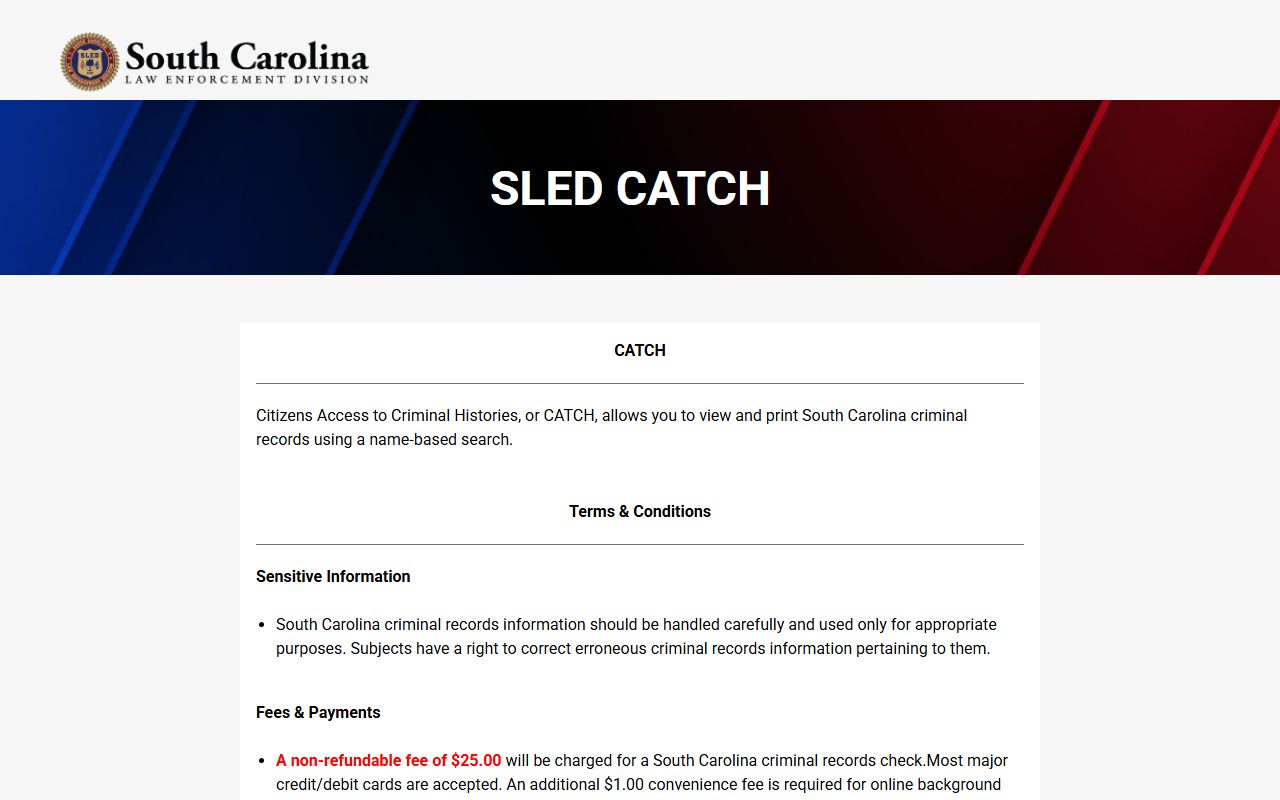
Use SLED for criminal-history checks and the Clerk or Public Index for the court case file and certified court documents.
Sealed vs Expunged Records
Sealing and expungement are not the same. Sealing limits public access to a court record under a judicial order, while expungement removes eligible criminal records from ordinary public access through a statutory process. In Greenville County, criminal expungements are administered through the Thirteenth Circuit Solicitor for eligible cases.
| Point | Sealed | Expunged |
|---|---|---|
| Core Effect | Public access is restricted by court order. | Eligible records are removed from ordinary public access by statutory process. |
| Authority | Rule 41.1 requires a supported motion and judicial findings. | S.C. Code Title 17, Chapter 22, Article 9 governs eligible criminal expungements. |
| Local Path | A judge controls whether sealing is justified. | The Thirteenth Circuit Solicitor administers eligible Greenville County applications. |
| Public Search Result | The case or document may be hidden or limited. | The record should not appear in ordinary public channels after completion. |
The South Carolina expungement statutes set eligibility and process rules for criminal expungement.
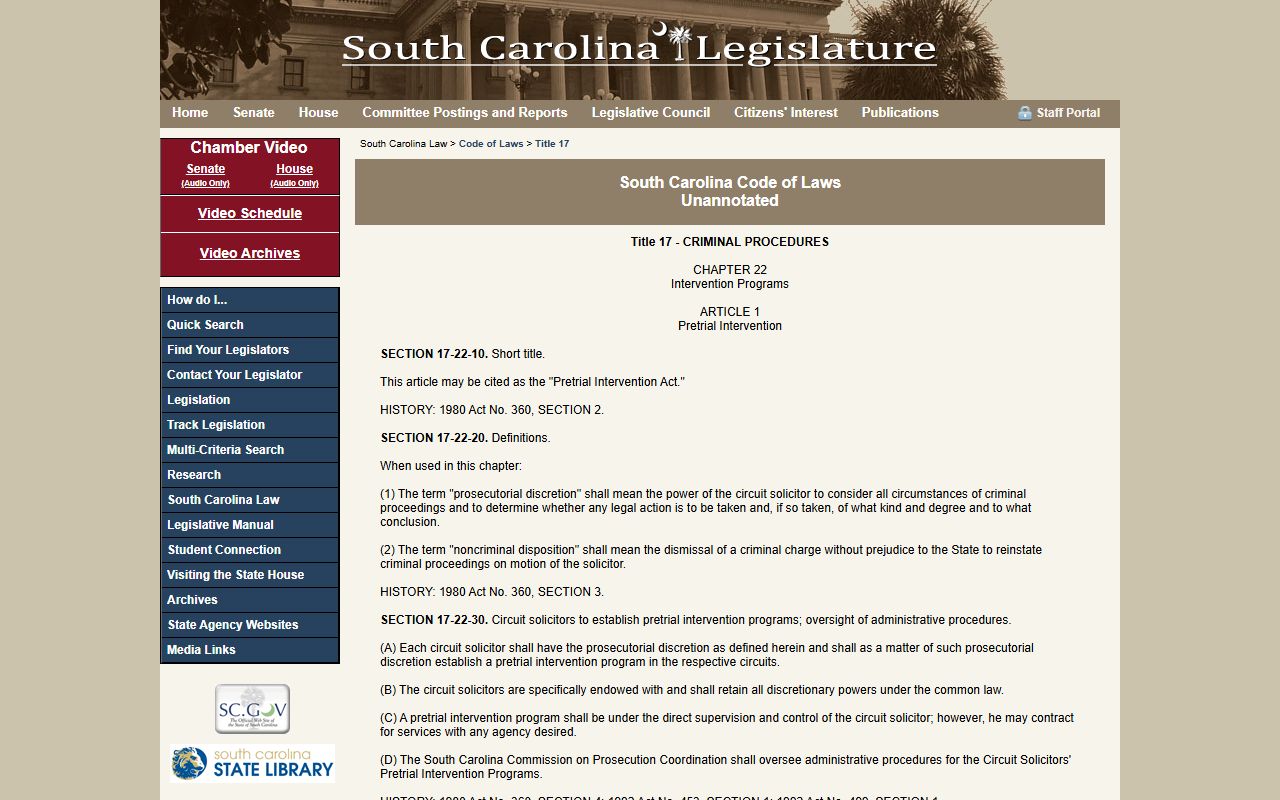
Those statutes explain why a Clerk search cannot simply remove a criminal record without an eligible expungement path or court order.
Restricted Greenville Criminal Records
Public access to Greenville County criminal court records has limits. The Clerk identifies dismissed warrants, sealed cases, juvenile cases, adoption filings, and records prohibited by law as exceptions to public viewing and copying. South Carolina juvenile records are confidential, and personal identifying information is governed by redaction rules.
Rule 41.2 requires filers to avoid or redact specified personal identifying information, and the confidential reference list is not public. As of January 1, 2026, home addresses no longer display on the Public Index for new or existing cases. Restricted or missing information should be checked with the court that holds the file rather than inferred from a search result.
Note: A public criminal court record can show accusations and outcomes, but an arrest or charge alone is not a conviction.